Best Seafood In Vancouver: Oysters, Salmon And Where Locals Go
Vancouver sits between the Pacific and a river delta, so its seafood scene runs from dockside prawn sales to raw bars a short walk from the cruise terminal. Here is where the city's fish actually comes from, which neighbourhoods to eat it in, and how a guided market walk fits the same day.
Short answer
The best seafood in Vancouver clusters around Granville Island Public Market, Steveston's Fisherman's Wharf, and the raw bars of Gastown and downtown. Market food tours run from $85.14 to $119.95 per person and last about 2 hours; a Shipyards Local Eats Walk in North Vancouver runs from $113.73 per person over roughly 3 hours.
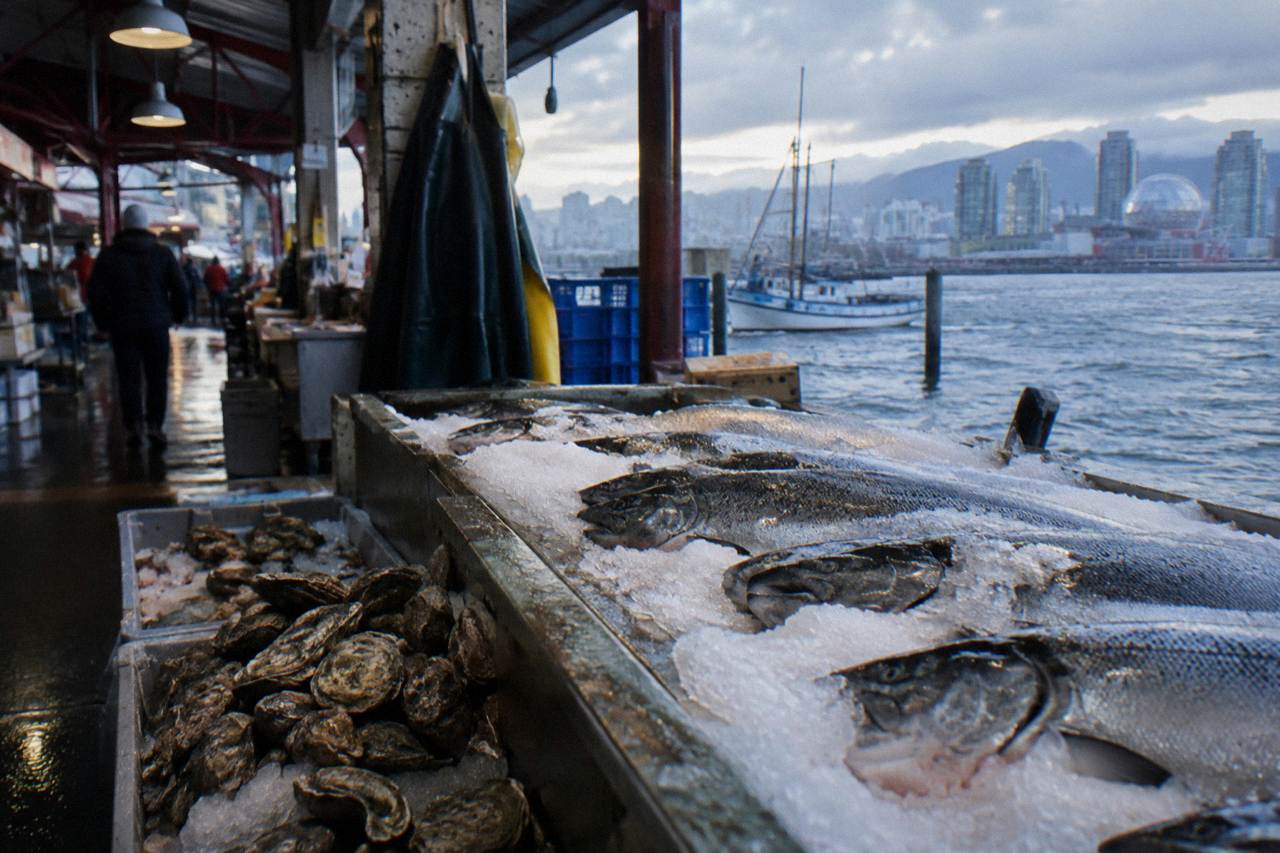
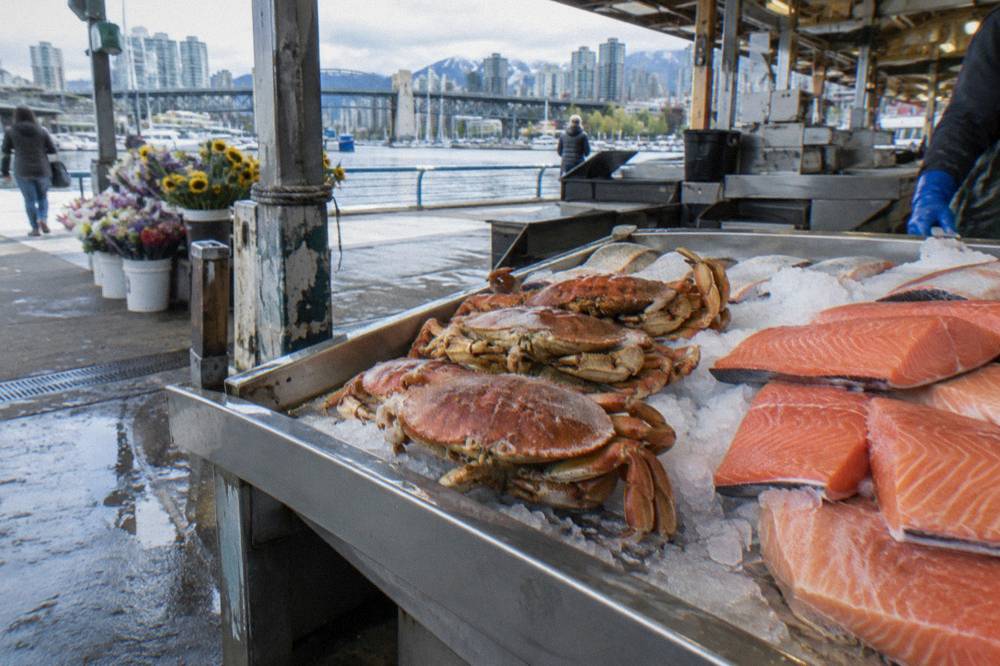
Seafood sits close to the center of Vancouver eating, and the reason is geography: the Strait of Georgia is on the doorstep, the Fraser River delta is to the south, and the fishing fleets land at Steveston on the river mouth south of the city. Spot prawns come off the boats at the public sales float when the season opens. Inside the Public Market, fishmongers sell live Dungeness crab from tanks, with sockeye and oysters arranged on the ice. When you're ready to look beyond the fish counters, our guide to the dishes that define Vancouver takes you from dim sum to craft beer.
That abundance makes the city easy to eat badly in, too. Tourist strips sell thawed scallops at premium prices two blocks from a market selling the live version. This guide sorts the two apart: where the fish actually comes from, which neighbourhoods concentrate the good raw bars and seafood counters, what spot prawn season involves, and which guided tasting walks are worth booking if you would rather have a route than a spreadsheet. A good companion piece for the wider restaurant picture is our best restaurants in Vancouver guide, and the tasting-walk angle is covered in depth on the Granville Island food tour page.
Where Does Vancouver's Best Seafood Actually Come From?
Most of the city's best seafood never sees a distribution warehouse: it moves from boat to dock to market counter, with Steveston's Public Sales Float, False Creek's fishermen's wharf and the Granville Island Public Market as the three main landing points. Knowing which of the three you are standing at tells you what to buy.
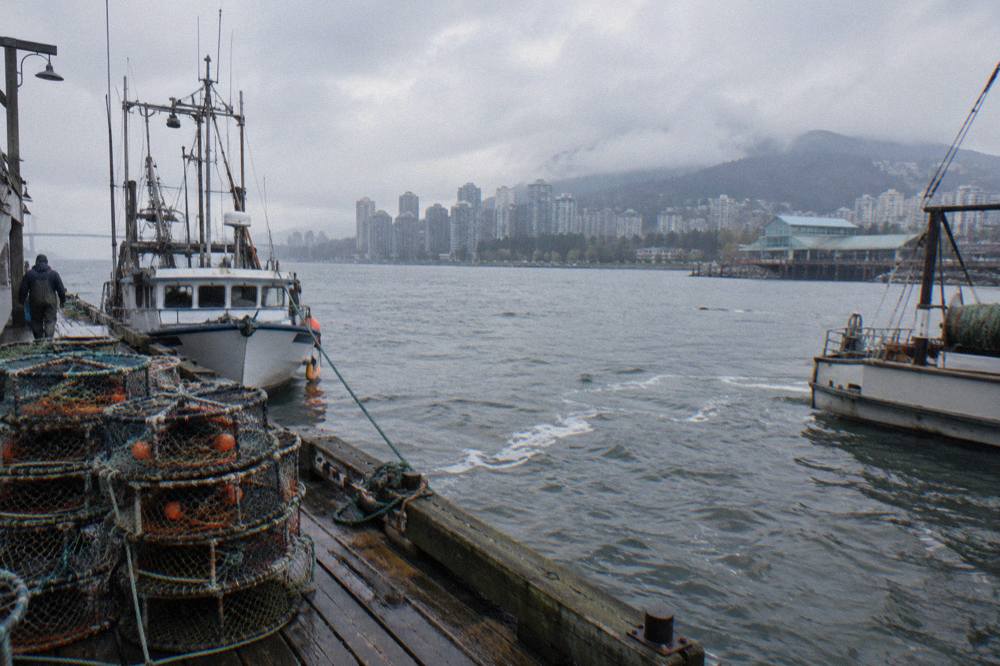
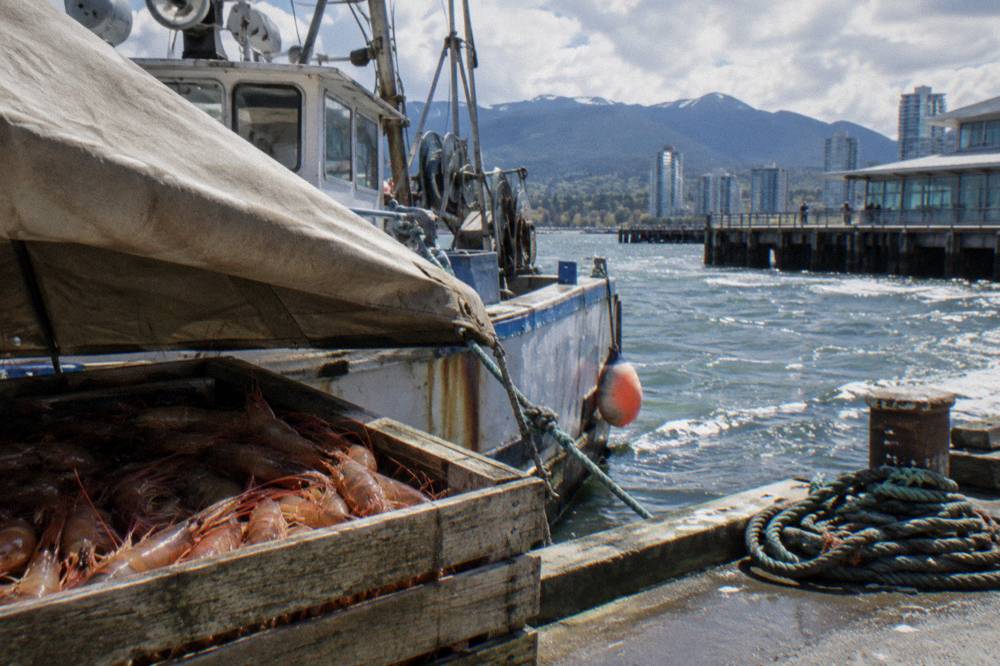
Steveston, at the mouth of the Fraser in Richmond, is the historic hub. The Steveston Harbour Authority has run direct sales of fish and seafood from moored fishing vessels at its Public Sales Float since the practice began unofficially in the 1970s; today the float at Fisherman's Wharf is where locals buy crab, salmon and prawns straight off the deck. Details of current-season sales hours are on the harbour authority's own site, and the whole village is mapped out in our Steveston Village food guide.
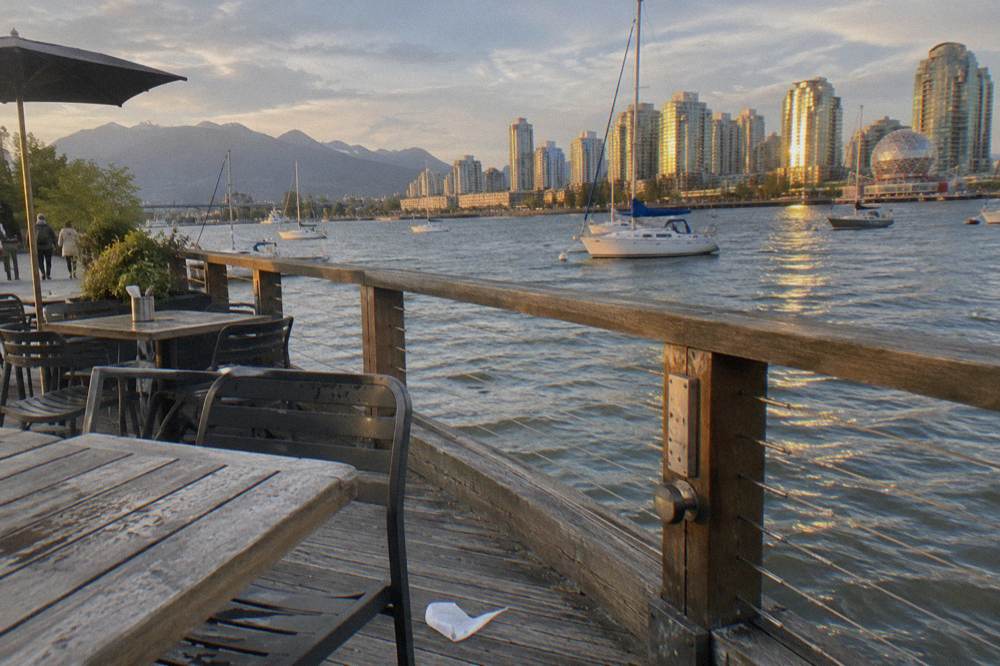
False Creek, between downtown and Kitsilano, is the second landing point. The Spot Prawn Festival's 20th edition ran there on Sunday, May 31, 2026, at False Creek Fishermen's Wharf, with live, locally sourced prawns sold direct off the dock from 1 PM onwards through the season. The festival's organizers describe the prawn fishery as sustainable and strictly seasonal; 2027 dates have not been posted, so treat May as the pattern rather than a promise.
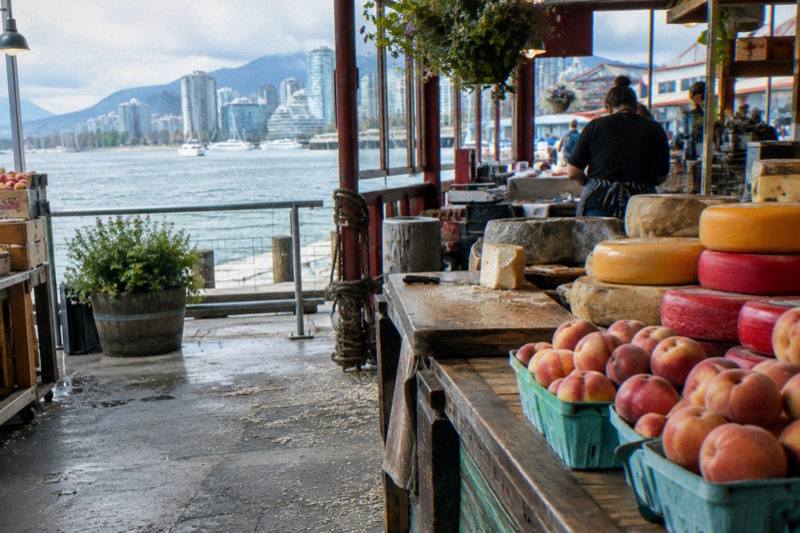
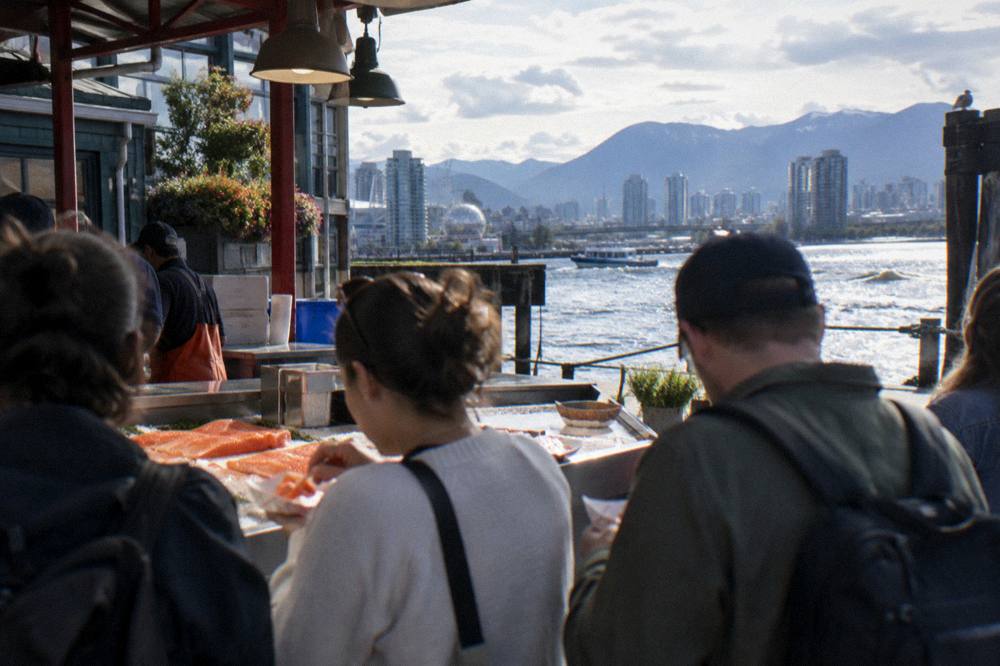
Granville Island Public Market is the third point, and the one most visitors see first. The market operates daily from 9 AM to 6 PM, staying open on statutory holidays except December 25, December 26 and January 1, and closing Mondays in January for maintenance. Its fishmongers sell live crab tanks, shucked oysters and whole fish over ice, and because the market doubles as the city's produce and bakery hub, it rewards a half-day rather than a quick stop. Our Granville Island Public Market guide covers the stalls in detail.
| Source | What You Buy There | Notes |
|---|---|---|
| Steveston Public Sales Float | Crab, salmon, spot prawns in season | Sold directly from fishing vessels |
| False Creek Fishermen's Wharf | Live spot prawns, seasonally from May | Festival docks, sales from 1 PM daily in season |
| Granville Island Public Market | Oysters, live Dungeness crab, whole fish | Open daily 9 AM to 6 PM |
| Richmond Public Market | Live tanks, cooked seafood stalls | Daily 9 AM to 6 PM |
What Are The Best Oysters In Vancouver?
Kusshi and Kusshi-class oysters from the coasts of British Columbia are the local standard: small, deep-cupped, sweet and clean, and they dominate raw bars across the city alongside Fanny Bay, Stellar Bay and beach-grown varieties, usually ordered by the half dozen with a mignonette.
BC oysters come mostly from the cold, clean waters around Vancouver Island and the Sunshine Coast, and Vancouver's raw bars rotate them like wine lists. The pattern to expect downtown and in Gastown is a pairing of one or two premium small oysters with a cheaper shucking-grade option, so a table can order mixed dozens without wrecking the budget. What varies is the setting: Kissa Tanto, the Michelin-starred spot at 263 E Pender near Gastown's edge, is a different evening from a market counter where the oyster is shucked in front of you and eaten standing up.
The 2026 Michelin Guide, revealed on October 6 with 11 starred restaurants in total and AnnaLena promoted to two stars, tells you where the top-end fish cooking sits: the starred list includes Kissa Tanto in the Gastown area and St. Lawrence at 269 Powell Street, both within a short walk of raw bars and seafood counters. Kavita in Mount Pleasant picked up a new Bib Gourmand in the same guide, a sign that serious cooking at friendlier prices is spreading beyond the downtown core.
For oysters with a view rather than a tasting menu, the counters around Granville Island and the docks at Steveston are the local answers. Prices at market counters move with the season, so check the board rather than expecting a fixed figure; the fishmongers post half-dozen and dozen prices daily.
If you would rather have someone build the tasting route for you, the walks below cover two market walks on the island itself, plus one food walk across the inlet on the North Shore.
The small-group market walk runs about 2 hours, is rated 4.9 across 640 reviews, and costs from $119.95 per person with food included and free cancellation per the listing. The 2-hour public market walk at from $109.78 per person, rated 4.8 across 165 reviews, covers similar ground in a different guide's voice; both start and finish inside the market, so an oyster stop before or after is easy.
Is Salmon Or Dungeness Crab The Signature Vancouver Seafood?
Both, but they answer different seasons: wild BC salmon peaks through summer and early fall and shows up smoked, cured, cedar-planked and raw, while Dungeness crab is the year-round local crustacean, sold live from market tanks and cracked at tables from Steveston to Chinatown.
Salmon is the fish visitors arrive expecting, and the city does not disappoint: sockeye, chinook and coho all land in BC waters, and the market counters smoke and cure enough of it that a vacuum-packed side is a standard souvenir. The local distinction worth knowing is between wild BC salmon and farmed Atlantic; the wild runs are seasonal and the price follows, so ask at the counter which run is in.
Dungeness crab is less famous and arguably more local. Live tanks at Granville Island and Richmond markets mean the crab you eat was often swimming that morning, and the classic local preparation is simple: steamed, cracked, with drawn butter or ginger and scallion. Chinese restaurants across Richmond and Vancouver's Chinatown do the best versions, which is one reason the Asian food walks sell well to seafood-first travellers.
The tax picture at restaurants is friendlier than most visitors expect. Meals in BC are exempt from provincial sales tax and carry only the 5% federal GST, though liquor ordered alongside adds the 10% PST that applies to alcohol. The BC government's own publication spells this out for food and beverage sellers.
| Seafood | Peak Availability | Where To Eat It Best |
|---|---|---|
| Wild BC salmon | Summer through early fall | Market counters, Gastown restaurants |
| Dungeness crab | Year-round from live tanks | Granville Island, Richmond, Chinatown |
| Spot prawns | May and June | Direct from boats at Steveston and False Creek |
| BC oysters | Year-round, best autumn to spring | Raw bars downtown, market counters |
Which Neighbourhood Should You Eat Seafood In?
Gastown and downtown concentrate the polished raw bars and seafood-focused kitchens, Granville Island does market-counter eating at its best, North Vancouver's Shipyards district pairs seafood with a working waterfront, and Richmond and Chinatown are where the crab and live-tank traditions run deepest.
Gastown is the evening choice. The neighbourhood's restaurants sit inside a national-scale food story: Kissa Tanto and St. Lawrence both held Michelin stars into the 2026 guide, and the district's newer openings keep the density high. A Premium Gastronomic Gastown Walk at from $225.40 per person, rated 4.9 across 245 reviews, is the tasting-walk way to cover it, with both food and drinks included over roughly 3 hours.
North Vancouver is the underrated pick. The Shipyards district in Lower Lonsdale sits on the water with the North Shore mountains behind it, and its food scene grew out of the night market and the Lonsdale Quay market. The Shipyards Local Eats Walk covers it in roughly 3 hours at from $113.73 per person, rated 4.9 across 89 reviews, with food and drinks included. The free Friday Shipyards Night Market ran May 15 through September 11 in the 2026 season; Friday evenings remain the district's natural seafood-and-beer slot regardless.
Richmond, south of the river, is the live-tank capital. There is no Richmond tour among the guided options, but the Canada Line connects it to downtown, and Richmond Public Market at 8260 Westminster Highway is listed as open daily 9 AM to 6 PM. The city's reputation took an unusual turn in October 2026 when Baan Lao in Steveston was named North America's best restaurant by the World Culinary Awards, a Thai tasting-menu room rather than a seafood house, but a marker of how seriously the suburb cooks. Our Richmond BC food tour page covers the neighbourhood properly.
Chinatown, designated a National Historic Site of Canada in 2011, is where dim sum's seafood repertoire lives: ha gao, siu mai, and whole steamed fish. The 4-hour chef-led walk, from $118.92 per person and rated 4.9 across 686 reviews, is the most reviewed Asian-food option of the three and includes food and drinks.
For a shorter Chinatown format with a seafood lunch built in, the Dim Sum Lunch Heritage Walk runs about 2.5 hours at from $89.44 per person with a dim sum lunch and tea tasting included; it is rated 4.8 across 6 reviews.
When Is Spot Prawn Season In Vancouver?
Spot prawn season opens in mid-May and runs roughly six weeks, with live prawns sold directly off boats at Steveston's Fisherman's Wharf and at False Creek's fishermen's wharf in Vancouver; the 2026 season and its festival events are past, and 2027 dates have not been announced.
The 2026 pattern is instructive. The season opened May 14, the Steveston Spot Prawn and Seafood Celebration ran May 14 to June 14 with a Dine About promotion at participating Richmond restaurants, Spot Prawn Day at Steveston was held June 6 with cooking demos and family activities, and the Spot Prawn Festival's 20th edition filled False Creek Fishermen's Wharf on May 31. That is five weekends of dockside seafood in a single corridor of the region, bookended by two wharves roughly 40 minutes apart.
If you are planning a trip around the prawns, anchor on mid-May to mid-June and check the festival's own site for the next edition's date rather than assuming the last Sunday of May. Prawns are sold live off the boats from early afternoon during the season, and the fishery is small-boat and short, which is why restaurants treat the first landings as an event.
One 2026 change matters to anyone combining seafood with night markets: the Richmond Night Market closed permanently at its current site, ending its final season on September 20 after its lease ran out. The City of Richmond has said it hopes the market continues at a new location, but nothing is confirmed, so do not build an evening around it. The Shipyards Night Market in North Vancouver, free on Fridays, ran May 15 to September 11 in 2026 and is the working alternative on the water.
| Event (2026 Season) | Dates | What Happened |
|---|---|---|
| Season opening | May 14, 2026 | First live prawn landings and boat sales |
| Steveston Spot Prawn and Seafood Celebration | May 14 to June 14, 2026 | Boat sales, Dine About restaurant promotion |
| Spot Prawn Festival, 20th edition | May 31, 2026 | Festival day at False Creek Fishermen's Wharf |
| Steveston Spot Prawn Day | June 6, 2026 | Cooking demos, sustainability exhibits |
Are The Seafood Food Tours In Vancouver Worth Booking?
Yes, if you want the market-and-waterfront version of the scene rather than a sit-down dinner: the guided options run $109.78 to $119.95 per person for roughly 2 hours at Granville Island, include food, and carry free cancellation on most listings, which makes them low-risk to book ahead.
The honest framing is that a food tour does not replace a seafood dinner, it replaces the research. A guided market walk tells you which counter shucks to order, which stall smokes its own salmon, and what a fair price for live crab looks like, and it does it in two hours. Walk it alone and you will still eat well, but you will spend the first 40 minutes orienting.
The numbers make the decision easy. The small-group market walk costs from $119.95 per person, is rated 4.9 across 640 reviews, includes food, and offers free cancellation per the listing. The 2-hour public market walk from the chef-led series costs from $109.78 per person and is rated 4.8 across 165 reviews with free cancellation. Both are well inside the range our how much does a Vancouver food tour cost analysis covers, and both are short enough to pair with an evening reservation in Gastown.
For travellers who want seafood learning rather than seafood eating, a class is the alternative route: the sushi making class downtown runs 2 hours at from $60.82 per person with all ingredients and equipment included, drinks available to buy, and free cancellation, though as a new listing it has no reviews yet, so no rating applies.

How Do You Plan A Perfect Seafood Day In Vancouver?
Start at Granville Island Public Market in the morning when it opens at 9 AM, eat your way through the counters, take a guided two-hour walk if you want the route built for you, cross to Steveston in the afternoon for the docks, and finish with a raw bar or a crab dinner back downtown: it is a full but very doable day.
The sequencing is what makes it work. The market is calmest in the first hour, and the tasting walks depart from the island, so book a late-morning walk and use the early hour for coffee and oysters on your own. The Aquabus dock sits between the Public Market and the Arts Club Theatre if you arrive by water, and pay parking on the island runs daily until 10 PM, so transit or the ferry is the relaxed choice.
For the Steveston leg, the Canada Line and a bus connection get you there without a car, and the village rewards the trip with boat sales, the wharf and a handful of fish and chips shops that have been frying since long before the food tours arrived. The harbour authority's history of the Public Sales Float explains why the direct-sales tradition exists at all.
Private options exist if the day is a celebration. A private tour tasting six local dishes and fresh sushi runs about 3.5 hours from $193.93 with food included; the booking page states the price basis, so check it there before assuming per-person or per-group. Whatever the format, this is what Food Tours Vancouver exists to help you book: the seafood corridors of the city are walkable, tourable and, in market season, genuinely exceptional.
The same-day decision, if you are reading this on the morning you want to eat, comes down to format: market walk, waterfront walk, or raw bar with no guide at all. Each shape suits a different appetite and a different pace.
Common Questions About The Best Seafood In Vancouver
Where Does Vancouver's Best Seafood Actually Come From?
Mostly direct from boats: Steveston's Public Sales Float sells crab, salmon and prawns from moored fishing vessels, False Creek Fishermen's Wharf sells live spot prawns in season, and Granville Island Public Market's counters sell live Dungeness crab and shucked oysters daily from 9 AM to 6 PM.
What Are The Best Oysters In Vancouver?
BC oysters such as kusshi, Fanny Bay and Stellar Bay dominate the city's raw bars, usually ordered by the half dozen with mignonette. Downtown and Gastown have the polished raw bars; Granville Island counters shuck to order.
When Is Spot Prawn Season In Vancouver?
Spot prawn season opens mid-May and runs roughly six weeks. The 2026 season opened May 14 with the festival at False Creek on May 31 and Steveston's Spot Prawn Day on June 6; 2027 dates have not been announced.
Is Salmon Or Dungeness Crab The Signature Vancouver Seafood?
Both: wild BC salmon peaks summer through early fall and is sold smoked and cured at market counters, while Dungeness crab is the year-round local crustacean, sold live from tanks at Granville Island and cooked best in Richmond and Chinatown.
Are The Seafood Food Tours In Vancouver Worth Booking?
For the market and waterfront scenes, yes: guided walks run $109.78 to $119.95 per person for about 2 hours at Granville Island, include food, and most carry free cancellation, so the risk of booking ahead is low.
Which Neighbourhood Should You Eat Seafood In?
Gastown and downtown for raw bars and starred kitchens, Granville Island for market counters, North Vancouver's Shipyards for seafood on a working waterfront, and Richmond or Chinatown for live-tank crab and dim sum.