Is It Worth Visiting Chinatown In Vancouver?
A straight answer on whether Vancouver's Chinatown is worth your time, what to see, where to eat, and how a guided tasting walk changes the visit.
Yes, Chinatown is worth visiting, especially if food is the reason you are in Vancouver. It is one of the oldest Chinatowns in North America and a designated National Historic Site of Canada, with a dim sum and dumpling scene that draws locals every weekend. The honest caveat: parts of the surrounding Downtown Eastside are rough, so a first visit goes better with a plan, and often with a guide. If the guided approach appeals beyond Chinatown, our Vancouver street food tour guide covers which neighbourhoods have the walk-up counters, what a tasting costs, and which tours fit a first visit.
That is the short version. The longer version is that Chinatown in Vancouver suffers from a perception gap. Visitors arrive expecting either a sanitized tourist strip or a district in terminal decline, and it is neither. The neighbourhood around Pender Street holds the Millennium Gate, family associations housed in buildings over a century old, and a concentration of dim sum restaurants, barbecue shops, bakeries and herbalists that few North American cities can match. The food is the anchor, and the food is genuinely excellent.
The uncertainty people feel is fair. Chinatown sits next to the Downtown Eastside, and the transition between the two can be abrupt: one block you are outside a bakery choosing between egg tarts and cocktail buns, two blocks later the street feel changes completely. That is not a reason to skip the area. It is a reason to know where you are going, to visit during the day when most people do, and to consider putting a structured experience at the centre of the visit.
If you want the district explained while you eat, the guided options do the heavy lifting. The most reviewed is A Wok Around Chinatown: Culinary and Cultural Walking Tour Led by a Chef, roughly four hours, rated 4.9 across 686 reviews, from $118.92 per person with food and drinks included. It sits at the top of most shortlists precisely because it removes the guesswork from a neighbourhood people are unsure about.
What Makes Vancouver's Chinatown Different?
Vancouver's Chinatown was designated a National Historic Site of Canada on July 19, 2011, recognition very few North American Chinatowns hold. It grew out of early Cantonese migration and stayed a living commercial district rather than becoming a theme-park version of itself. The result is a working neighbourhood of family associations, herbalists, barbecue shops and dim sum rooms alongside newer cafes and bakeries.
The history matters more than most visitors realize. Chinese merchants and workers established themselves around Dupont Street, now part of Pender, well over a century ago, and many of the buildings those community associations built still stand. The Chinatown Foundation and the Chinese Canadian Museum, which opened in the old Bank of British Columbia building on Pender, have made that history visible in a way it was not a decade ago. You can read the district's story on its own walls now, not just in archives.
What separates it from the Chinatowns of, say, San Francisco is the mix. This is not a district that emptied out when families moved to the suburbs and Richmond's Asian food scene boomed. It kept its dim sum houses, its barbecue windows, its produce stalls spilling onto the sidewalk, and it layered in third-wave coffee, a craft cocktail bar or two, and one of the city's more interesting bakery scenes. The old and the new sit side by side, sometimes in the same building.
The food claim is not empty boosterism. When the 2026 Michelin Guide Vancouver was revealed on October 6, 2026, it spotlighted 11 starred restaurants citywide, and several of the city's most respected Chinese and Cantonese kitchens operate in or near this district and Richmond. Vancouver's Chinese food reputation was built on Cantonese tradition, and Chinatown is where much of that tradition still cooks. If your visit is food-first, the district earns its place on the itinerary on dim sum alone.
Not sure where to start on the day itself? A guide solves that in one booking.
The four-hour chef-led walk covers the district's food and its history in one pass, and the listing notes free cancellation terms you can confirm before you commit. Check availability on the operator's booking page.
What To See Beyond The Millennium Gate?
Start at the Millennium Gate on Pender Street, walk east past the Chinese Cultural Centre, then loop the blocks around Keefer and Columbia for produce stalls, herbalists and bakeries. The whole core is compact, roughly six blocks, walkable in an hour at sightseeing pace, or half a day with food stops.
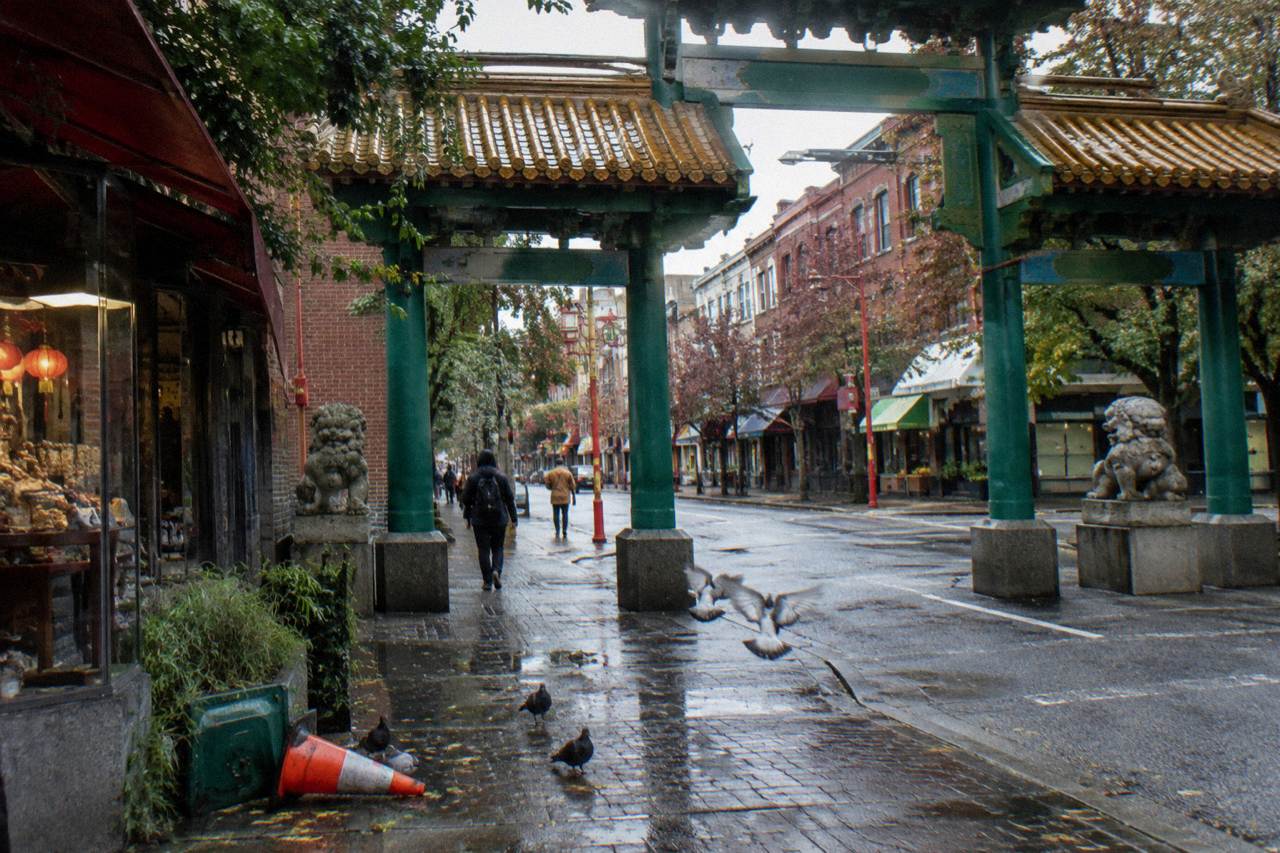
The gate itself, erected to mark the millennium, is the neighbourhood's postcard shot and the natural entry point from Gastown. From there, Pender Street carries you past the family association buildings with their painted balconies, the Chinese Cultural Centre, and the museum. Just south sits a Ming-dynasty-style garden built by craftsmen using traditional techniques; the adjacent public park is free to wander.
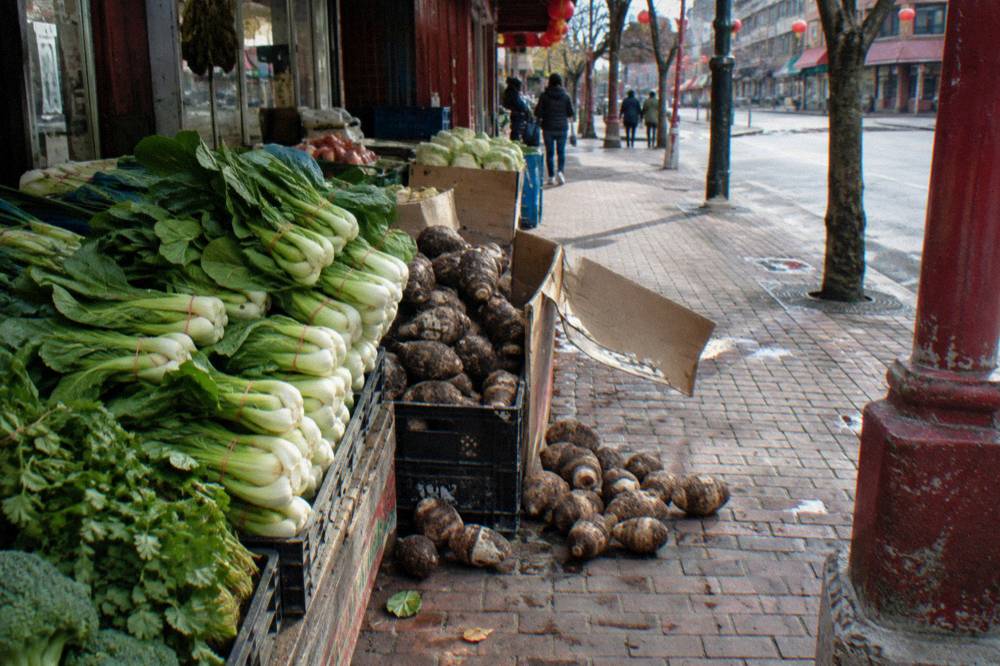
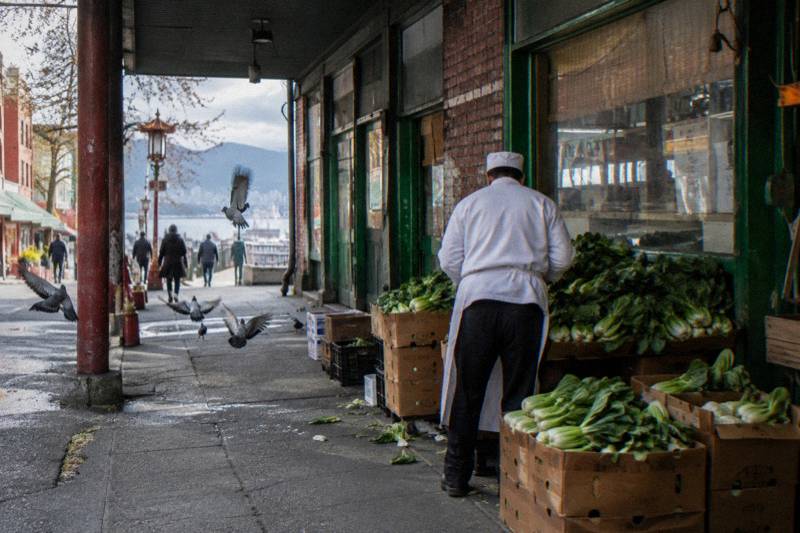
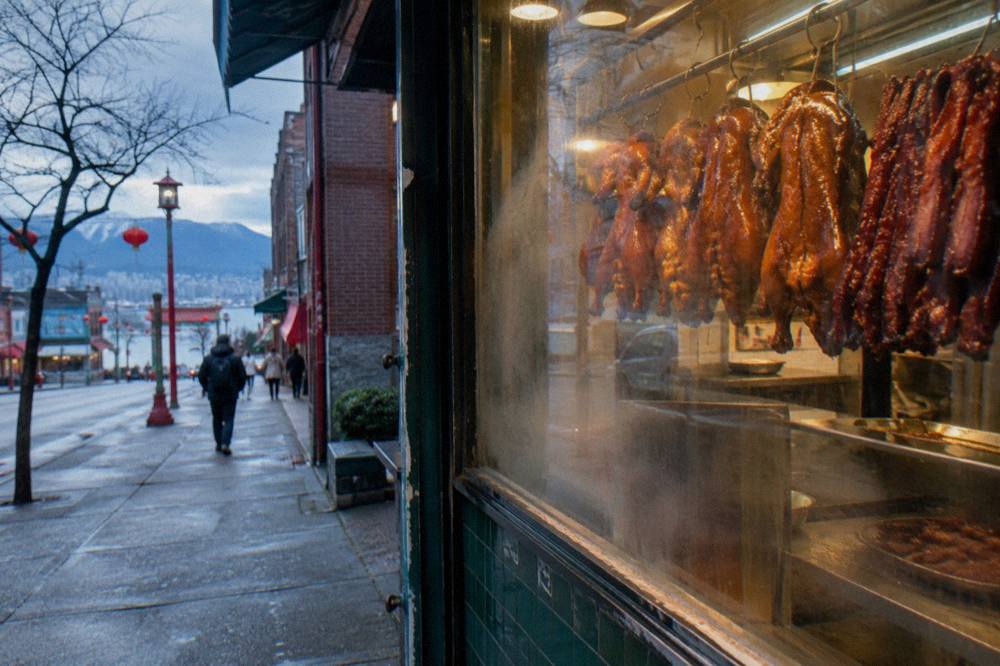
The street-level texture is the part people remember. Sidewalk produce displays, roast ducks hanging in windows, barrels of dried goods, an apothecary smell drifting from herbalist shops. None of it is staged for tourists. These are businesses serving a customer base that has shopped here for decades, which is exactly why the district still feels real when so many others feel like replicas.
A practical note on scope: Chinatown is not Richmond. Richmond, a Canada Line ride of roughly 20 to 25 minutes from downtown, has the larger modern Chinese food scene, and its Richmond Night Market closed permanently at its current site after the 2026 season, which ran April 24 to September 20. Chinatown is the historic core. If your interest is heritage plus traditional Cantonese cooking, Chinatown is the right stop. If it is contemporary Asian dining across a dozen cuisines, the Ultimate Asian Food Adventure, roughly three hours, rated 4.9 across 44 reviews, from $152.15 per person, runs through downtown and a string of Asian restaurants instead.
That tour is the better fit when you want breadth of Asian cuisines rather than one district's history, and it pairs well with a separate self-guided hour in Chinatown.
Is Chinatown Safe For Visitors?
Chinatown itself is generally safe to visit during the day, when nearly all tourists go and when the markets, restaurants and shops are busy. The complication is the adjacent Downtown Eastside, where visible homelessness and open drug use are real. Stay on the main streets, keep to daylight hours, and treat the area like any big-city district where parts of the edge are rougher than the core.
This deserves a direct answer because it is the question people actually type. The core blocks around Pender, Keefer and Columbia, where the gate, garden, museum and most restaurants sit, feel like a normal busy commercial district. The rough edges are concentrated a few blocks east and north, in the Downtown Eastside around East Hastings. The boundary is not marked, but you will feel it, and the standard advice is simply to route yourself accordingly: approach from Gastown via Water Street to Carrall Street, rather than walking up East Hastings. Other pages covering the same trip are gathered on Food Tours Vancouver.
Daytime visiting is the norm anyway, because that is when the food is at its best. Dim sum service runs from mid-morning into early afternoon, bakeries sell out of their best items by early afternoon, and most shops close by early evening. There is little reason for a first-time visitor to be in the district after dark, and several good reasons not to be. If you want an evening Asian-food experience, the downtown-based tours handle that in livelier surroundings.
Go with a guide if the edge concerns you. The chef-led Chinatown walk keeps a group together through the whole four-hour route, which is a real comfort factor for solo travellers and anyone who has read one too many forum threads. Group tours in general solve this: a local operator manages the routing, the timing and the restaurant choices, and you just eat.
One more reassurance worth having in your pocket: BC's tax rules make dining here straightforward. Restaurant meals are exempt from provincial sales tax and carry only the 5% federal GST, per the BC government's own publication, while liquor adds 10% PST. Your dim sum bill will make more sense knowing that split. Tips are separate, go to the guide or server, and the booking page states whether gratuity is included on any given tour.
Where To Eat: Dim Sum, Dumplings And More
Eat dim sum for the anchor meal, and do it at lunch. Chinatown's Cantonese kitchens are at their best from late morning, when carts and made-to-order baskets are in full swing. Add a bakery stop for egg tarts and cocktail buns, and a barbecue shop window for roast duck and char siu. A guided tasting walk samples several of these in one sitting, which is why most visitors end up recommending one.
The guided options give you a useful map of what the district's food looks like. Here is how the main Chinatown and Asian-food experiences compare:
| Experience | Decision Name | Length | Rating | Price |
|---|---|---|---|---|
| A Wok Around Chinatown | Chef-Led Chinatown Walk, 4 Hours | ~4 hours | 4.9 across 686 reviews | from $118.92 per person |
| Chinatown Heritage Walk and Dim Sum Lunch | Dim Sum Lunch Heritage Walk | ~2.5 hours | 4.8, 6 reviews | from $89.44 per person |
| Chinatown Tour and Dumpling-Making Cooking Class | Dumpling Class Plus Chinatown Walk | ~3 hours | 4.7, 14 reviews | from $135.00 per person |
| Chinatown Dumpling-Making Masterclass | Dumpling Masterclass, Meal Included | ~3 hours | 3.9, 8 reviews | from $107.32 per person |
| Ultimate Asian Food Adventure | 3-Hour Asian Eats Adventure | ~3 hours | 4.9 across 44 reviews | from $152.15 per person |
Read that table by what kind of eater you are. The chef-led walk is the most reviewed by a wide margin and includes both food and drinks across its four hours. The heritage walk with dim sum lunch is the shorter, cheaper, food-forward option, and with only six reviews so far it is unproven rather than poorly rated, a distinction that matters. The dumpling classes flip the format: instead of walking between restaurants, you learn to make the food yourself, and the masterclass includes the meal you produce plus drinks.
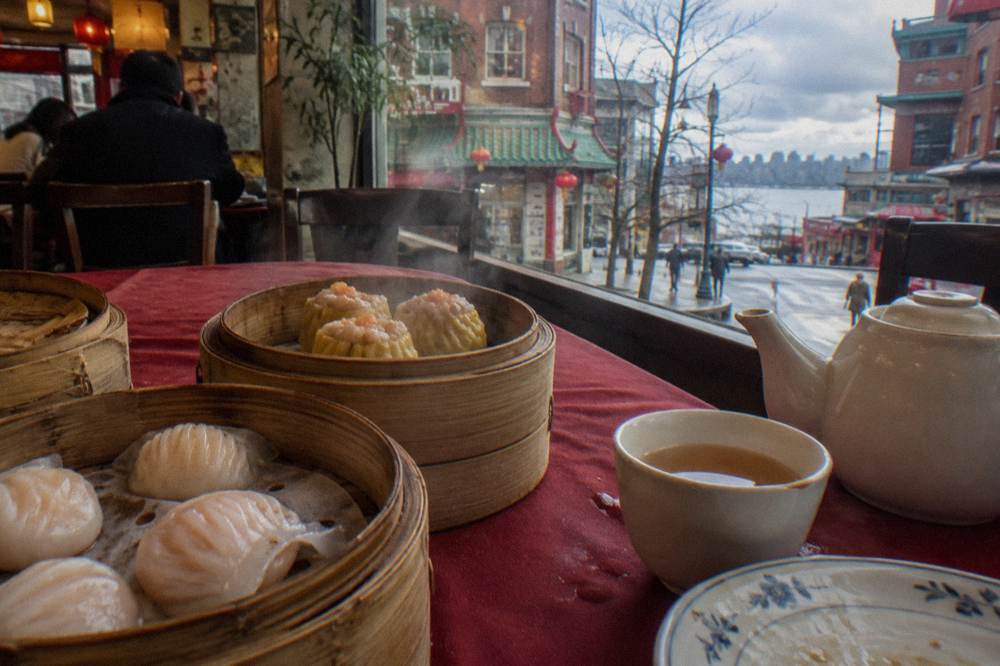
Solo diners and independent explorers should anchor on dim sum at lunch, then work the bakeries. Order what the room is eating: har gao and siu mai as the baseline, whatever the kitchen flags as house-made, and a plate of the district's barbecue if the table can take it. Arrive before noon on weekends for the shortest waits, because the best rooms fill with multigenerational local families, which is itself a good sign you have found the right place.
If making the food beats eating it for you, the hands-on route is strong value. The dumpling masterclass runs about three hours from $107.32 per person. The full meal of dumplings you make yourself is included; beverages are not, though you can buy them on site. For a deeper rundown, our Vancouver dumpling making class guide compares all of them side by side.
Should You Take A Guided Tour Or Explore Alone?
Explore alone if you know the food already and just want dim sum plus a walk; take a tour if Chinatown is unfamiliar, if the Downtown Eastside edge worries you, or if you want history alongside the meal. A guide also gets you into kitchens and stories you will not find on your own, and the best-reviewed Chinatown walks cost about the same as a restaurant lunch plus a museum ticket.
The case for a guide in this specific district is stronger than in most. Chinatown's story is not written on plaques: the family association buildings, the reasons the district survived, the difference between the food here and in Richmond, all of it benefits from narration. A chef-led format adds the kitchen side. The four-hour A Wok Around Chinatown walk, rated 4.9 across 686 reviews, from $118.92 per person, includes food and drinks and covers both the cultural layer and the eating, which is why it dominates the category's review counts.
The case for going alone is cost and pace. You can eat extremely well in Chinatown for far less than any tour price if you already know your siu mai from your har gao, and the district's core is small enough that getting lost is not a real risk during the day. The middle path many people land on: one guided experience as the anchor, then a second self-guided visit to the bakeries and the garden at your own speed. Check availability and dates on the tour's booking page, since schedules in this category fill on weekends.
The shorter heritage walk with dim sum lunch splits the difference, about 2.5 hours from $89.44 per person, food and drinks included, with a heritage narration and a sit-down lunch at the centre. It has only a handful of reviews so far, so it reads as a promising newer option rather than a proven one.
Whichever format you pick, book the food anchor before you arrive. Weekend dim sum rooms do not take kindly to a 1 p.m. arrival, and the guided walks sell weekend dates first.
How To Plan Your Visit
Plan a half day: morning dim sum or a late-morning tour, then the garden, the gate and a bakery loop in the early afternoon. Come by SkyTrain or on foot from Gastown, bring cash for small shops though cards are widely accepted, and visit between Wednesday and Sunday when more of the district's shops are open. A rainy day matters less here than anywhere in Vancouver, since dim sum is an indoor sport.
Getting there is simple. Chinatown is a 10 to 15 minute walk from Gastown and the cruise port area, which makes it a natural pairing: Gastown in the morning, Chinatown over lunch. The Stadium-Chinatown SkyTrain station sits at the district's northwest corner. If you are combining it with Richmond later, the Canada Line connection is straightforward, and the TransLink one-zone adult cash fare is $3.50. An adult Compass Card fare is lower, at $2.85 for one zone, so paying with a card rather than cash saves money on every trip.
A sample half-day plan:
| Time | Activity | Notes |
|---|---|---|
| 10:00 AM | Guided walk or dim sum lunch | Most tours meet mid-morning; dim sum rooms peak 11 AM to 1 PM |
| 1:30 PM | Pender Street stroll and Millennium Gate | Family association buildings, Chinese Cultural Centre |
| 2:15 PM | Bakery and market loop | Egg tarts, cocktail buns, produce stalls |
| 3:00 PM | Coffee or a walk back via Gastown | Ten to 15 minutes on foot |
Two budget notes worth knowing before you go. Restaurant food in BC carries no provincial sales tax, only the 5% GST, while any alcohol with your meal adds the province's 10% liquor PST, so a beer with dim sum changes the math more than the food does. And the legal drinking age in BC is 19, which matters for the tours that include drinks: anyone in your party under 19 should be booked onto a food-only experience, and the booking page flags age requirements per tour.
Seasonality barely applies. Chinatown's attractions are mostly under roofs, the market stalls run in most weather, and the district is arguably at its most atmospheric during Chinese New Year, when the parade route runs straight through it. Whenever you come, the food is the same, and the food is the point.
So, back to the original question. Is Chinatown worth it? If you care about Chinese food, urban history, or seeing a neighbourhood that is genuinely itself rather than performing for visitors, yes, and comfortably. Approach it with a plan, ideally a guide for the first pass, and it delivers one of Vancouver's best half days.
Common Questions About Chinatown In Vancouver
Is It Worth Visiting Chinatown In Vancouver?
Yes, if food or history interests you at all. Chinatown is a National Historic Site with one of North America's better dim sum scenes, and its core blocks are walkable in a couple of hours. Visit during the day, anchor the trip around lunch, and consider a guided walk such as the four-hour chef-led tour rated 4.9 across 686 reviews to get the district's full story with the food included.
Is Chinatown In Vancouver Safe For Tourists?
The core district around Pender, Keefer and Columbia is a normal busy commercial area during the day. The adjacent Downtown Eastside, a few blocks east and north, has significant visible homelessness and open drug use. Stay on the main streets, visit in daylight when most people do, and a guided group removes nearly all the uncertainty for a first visit.
What Is The Best Time To Visit Chinatown?
Late morning through early afternoon, Wednesday to Sunday. Dim sum service peaks from 11 AM to 1 PM, bakeries sell out of their best items by early afternoon, and more shops open midweek through the weekend than early in the week. Chinese New Year is the district's most atmospheric period, with the parade running through its heart.
How Do I Get To Chinatown From Downtown Vancouver?
It is a 10 to 15 minute walk from Gastown, or one stop on SkyTrain to Stadium-Chinatown station. The TransLink adult one-zone cash fare is $3.50, or $2.85 with a Compass Card. Coming from Richmond, the Canada Line connects via Waterfront or City Hall with a transfer.
Can You Take A Food Tour In Chinatown?
Yes. The flagship is A Wok Around Chinatown, a chef-led four-hour walk rated 4.9 across 686 reviews, from $118.92 per person with food and drinks included. Shorter options include a 2.5-hour heritage walk with dim sum lunch from $89.44 per person, and a dumpling-making masterclass with the meal included from $107.32 per person.